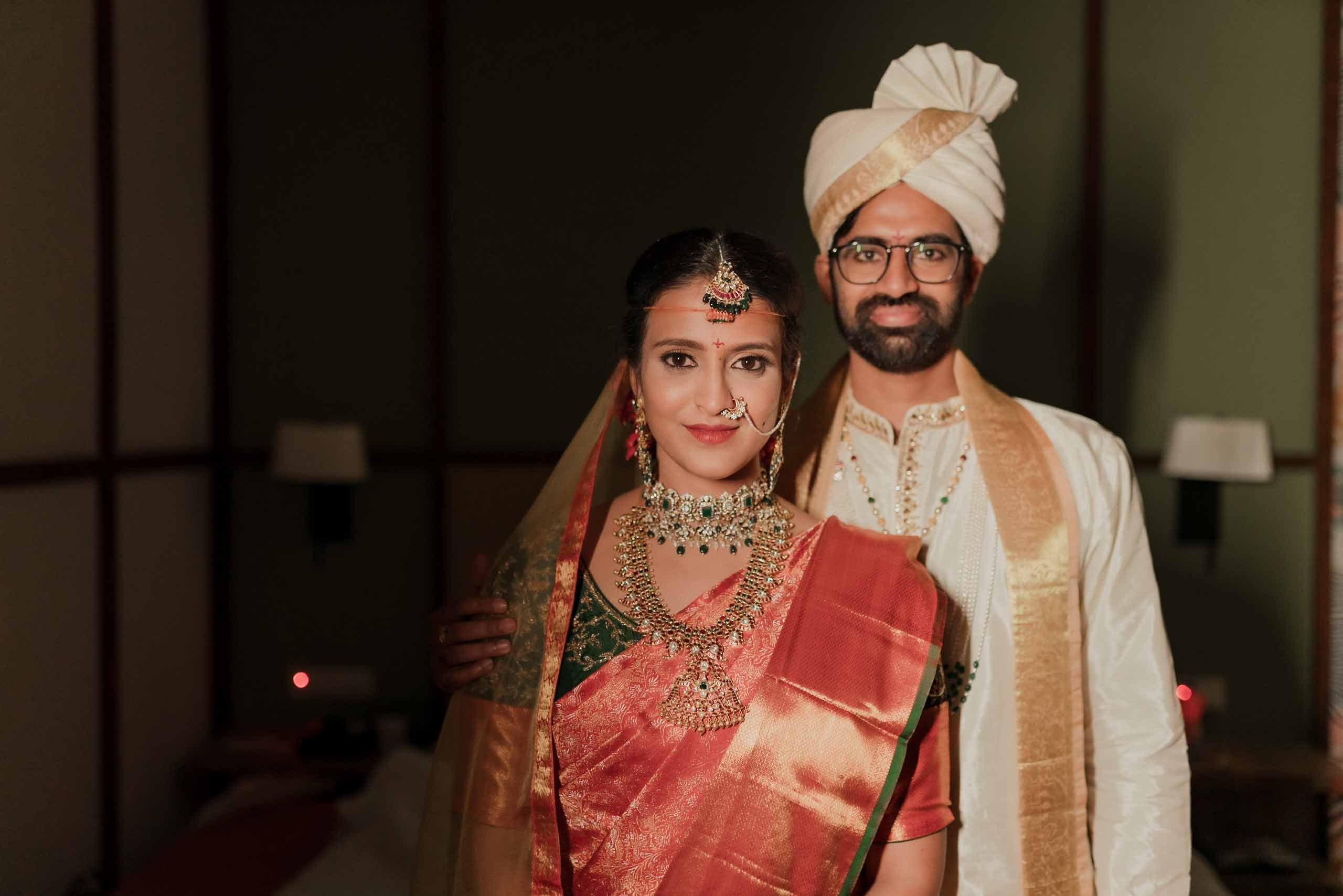
Telugu Wedding Photography — Pellikuthuru, Jeelakarra Bellam, Talambralu & What to Expect
Telugu weddings move at their own particular pace — and that pace is fast.
The muhurtham is fixed weeks or months in advance, sometimes to the minute, and the ceremonies build toward it with a precision that means the most important moment of the entire wedding can pass in under sixty seconds. The rituals are layered across multiple functions, the families are often large and warmly present, and — unlike many wedding traditions — the most photogenic moments are frequently the loudest, most chaotic ones rather than the quiet ones.
If you're a Telugu couple planning your wedding, or trying to understand what your photographers will need to know in advance, this guide walks through the major rituals in order — Pellikuthuru, Mangala Snanam, Kashi Yatra, Jeelakarra Bellam, Talambralu, and Appaginthalu — what each looks like, where the emotional weight usually falls, and what we've noticed from photographing them.
Pellikuthuru & Pellikoduku — The Day Before
The Pellikuthuru (for the bride) and Pellikoduku (for the groom) are the pre-wedding ceremonies held a day before the wedding itself — oil, turmeric, and blessings applied by family members, folk songs playing in the background, the house fuller than it's been in years.
Photographically, these functions tend to be the most relaxed of the entire wedding. The formal nervousness of the wedding day hasn't arrived yet, and families move around each other with the ease of people who have been preparing for this weekend for months. The bride's mother adjusting a dupatta. The groom's younger siblings arguing about seating. A grandfather watching from a chair in the corner, not missing a thing.
What's often missed: the house itself, and the people moving through it. By the time the oil ceremony begins, everyone's attention is on the central ritual — but the room around it, the accumulated detail of a family gathering in a home, is where the real story of that day lives.
Mangala Snanam — Before Dawn
The ritual bath, taken early on the morning of the wedding. In many Telugu families this happens before sunrise, which means it's one of the quietest, most intimate moments of the entire wedding week — and one of the most under-photographed.
The light at that hour tends to be soft and warm if it's indoors, or cool and blue if there's any exterior. Either way, the Mangala Snanam has a stillness that's difficult to find later in the day, once the mandap fills and the dhol starts and the morning tips into the ceremony.
What's often missed: the transition out of it. The bride or groom — just bathed, dressed simply, before the heavier wedding attire — in those quiet minutes before the next ritual begins. It rarely lasts long, but it photographs differently from everything that follows.
Kashi Yatra — The One Everyone Laughs At
The groom announces he's leaving for Kashi. He has had enough of worldly life. He is renouncing everything, including, apparently, this wedding.
He is stopped, usually by the bride's father or brother, who makes the case for why marriage is, in fact, preferable to a life of solitary pilgrimage. The groom is persuaded. The wedding continues.
The Kashi Yatra is performed with an umbrella, a walking stick, and a level of theatrical commitment that varies significantly by family — but the laughter that comes with it is almost always unguarded and genuine. The groom's friends tend to be somewhere between supportive and completely unhelpful. The bride's brother is usually playing his role with more sincerity than anyone expected.
What's often missed: the groom's face in the moment just before he turns to leave, and the expression of whoever is doing the convincing — because they're both trying not to smile, and failing. That negotiation, not the formal beginning or end of the ritual, is where the photograph usually is.
Jeelakarra Bellam — The Actual Marriage
At the muhurtham — the auspicious moment determined by the priest, sometimes down to the second — the curtain (teraschadar) held between the couple drops, and they place a paste of jeelakarra (cumin) and bellam (jaggery) on each other's heads.
This is the marriage. Not the garlands, not the rings, not the seven rounds — this moment, this paste, this specific second is when a Telugu wedding is complete.
Everything about photographing the Jeelakarra Bellam comes down to preparation. The curtain drop happens fast, eye contact between the couple happens immediately after, and the family gathered around them tends to react all at once. There is no rehearsal and no second chance. We know this is coming before it happens, we're already positioned, and we're watching for the half-second of first eye contact rather than the ritual action itself — because that look, which lasts no longer than it takes to blink, is what couples actually remember.
What's often missed: the parents in that moment. The Jeelakarra Bellam tends to draw all photographic attention to the couple — reasonably — but the faces of the people who raised them, watching the curtain drop, are often the most emotionally dense frames in the entire gallery.
Talambralu — The Part Everyone Talks About Later
After the Jeelakarra Bellam, the couple pours rice mixed with turmeric and flower petals over each other's heads. This happens in rounds, tends to escalate, and ends with two people who are technically just married and are also covered in rice and turmeric and competing to see who can pour more.
The Talambralu is joyful in a way that's difficult to manufacture. Couples who were quiet and careful five minutes ago during the muhurtham are suddenly laughing, messy, and completely in the moment — and the family watching them tends to be just as unguarded.
We shoot the Talambralu low and close. Burst mode. The expression on a face mid-pour, the bride catching rice in her silk, the groom looking delighted at whatever is happening — these are the frames that end up as the most-saved in the gallery, consistently, across every Telugu wedding we've photographed.
What's often missed: the aftermath. When the rice settles and the couple looks at each other and at the mess they've both made, there's a quieter moment — still laughing, slightly disbelieving — that tends to be softer and more intimate than the action itself.
Saptapadi & Sthaalipaakam — Slowing Back Down
The seven steps taken together, and the cooking ritual that follows in some families — rice prepared over fire by the bride, the first act of the household they're beginning together.
After the energy of the Talambralu, the Saptapadi tends to slow everything down again. The couple is deliberate here, the priest is present, and there are vows being made that both of them are taking seriously. It's not uncommon to see a quiet exchange mid-round — a word, a tightened grip, a glance — that has nothing to do with the ritual itself and everything to do with the two people in the middle of it.
What's often missed: the rounds themselves are seven repetitions of the same action, and it's easy to cover them all the same way. They're not — the couple's energy shifts between rounds, and the later ones, especially the sixth and seventh, tend to carry more visible weight than the first.
Appaginthalu — On the Couple's Terms
The bride's farewell from her family. In Telugu tradition this is called Appaginthalu — the formal handing over — and it carries real emotional weight for everyone present, including people who were certain they would hold it together.
How couples approach the Appaginthalu is increasingly varied. Some follow the traditional format completely. Others, after real conversations with their families, choose to reframe what the departure means — gathering both sides together, exchanging thanks, walking out as two families joining rather than one person leaving. Either way, the Appaginthalu tends to be the moment where whatever has been held back across the entire wedding day finally arrives.
We hang back here. This isn't a moment that benefits from direction or proximity. The photographs that matter from the Appaginthalu are almost always taken from a distance, with a longer lens, of people who have entirely forgotten they're being photographed.
Planning Your Telugu Wedding Photography
Telugu weddings reward photographers who understand what's coming before it happens — because some of the most important moments are also the fastest. The Jeelakarra Bellam waits for no one. The Kashi Yatra's best frame is gone in a second. The Talambralu is over before it feels like it's started.
We do a detailed pre-wedding conversation with every Telugu couple we photograph — walking through the ritual sequence, the specific timing from the lagna patrika, the family members who matter, and the moments that are particular to their community and ceremony. That preparation is what makes the difference between a gallery and a gallery that actually captures the day.
We've photographed Telugu weddings in Mumbai and as destination celebrations across India, and we'd be glad to talk through exactly how we'd approach yours.
Want to see more South Indian Weddings. Browse more Telugu wedding stories
Frequently Asked Questions
What is Jeelakarra Bellam in a Telugu wedding?
The Jeelakarra Bellam is the actual moment of marriage. At the muhurtham the couple place a paste of cumin and jaggery on each other's heads — not the garlands or rings, but this, is the binding moment.
What is Talambralu?
Talambralu is the joyful ritual after the Jeelakarra Bellam, where the couple pour rice mixed with turmeric and flower petals over each other — one of the liveliest, most candid moments of the whole wedding.
What is Pellikuthuru?
Pellikuthuru is the pre-wedding ceremony for the bride (Pellikoduku for the groom), usually held the day before, involving an oil-and-turmeric ritual with the family.
What is Appaginthalu?
Appaginthalu is the bride's formal farewell from her family. Increasingly, couples reshape it on their own terms rather than following the traditional emotional format.

FAQ
A Telugu wedding typically includes Pellikuthuru/Pellikoduku (pre-wedding rituals), Mangala Snanam (ritual bath), Kashi Yatra, Jeelakarra Bellam, Talambralu, Saptapadi and Sthaalipaakam, and the emotional Appagintalu farewell.